Research Groups - Tags

.

Predictability of Extreme Weather (PredEx)

Dr. Assaf Hochman

Read More


.

The PredEx lab focuses on improving the ability to predict extreme weather events and their impacts across time and spatial scales, from regional to global and beyond.

Our work addresses the issue of weather and climate predictability from different perspectives, including physical observations, computer modeling, and mathematical/statistical theory.

Research Students

PhD Students 

Victor Murphy 
My PhD research focuses on enhancing intrinsic predictability in numerical weather prediction by using dynamical system metrics within machine learning and artificial intelligence. The goal is to integrate these metrics into predictive models, thus extending the forecast horizon for long-term weather predictions. I am also working on a research project in the broader department called Systems Thinking in Earth and Environmental Sciences Teaching, which Professor Carynelisa Haspel is coordinating.
Email: victor.murphy@mail.huji.ac.il

Tair Plotnik

André Klif
Analyze sub-seasonal forecast models and/or climate models to better predict the
probability of occurrence of heat waves in the Middle East.
Email: andre.klif@mail.huji.ac.il

Efraim Bril
Paleo-climate: climate change in the Levant during the last interglacial period
LinkedIn profile : Efi Bril
Email: efraim.bril@mail.huji.ac.il

MSc Students 

Margarita Mazor
Intricate relationship between weather types and the migration patterns of white storks
over the Eastern Mediterranean.
Email: Margarita.Mazor@mail.huji.ac.il 

Yuval Levin
Impact of anthropogenic emissions on the predicted precipitation regime for the Middle East
in the 21st century.
Email: yuval.levin@mail.huji.ac.il


Contact Us

assaf.hochman@mail.huji.ac.il |  Room 213 South

Publications


Hochman, A., Plotnik, T., Marra, F., Shehter, E. R., Raveh-Rubin, S., & Magaritz-Ronen, L. (2023). The sources of extreme precipitation predictability; the case of the ‘Wet’Red Sea Trough. Weather and climate extremes40, 100564.

Vakrat, E., & Hochman, A. (2023). Dynamical systems insights on cyclonic compound “wet” and “windy” extremes in the Eastern Mediterranean. Quarterly Journal of the Royal Meteorological Society149(757), 3593-3606.

Hochman, A., Shachar, N., & Gildor, H. (2024). Unraveling sub-seasonal precipitation variability in the Middle East via Indian Ocean sea surface temperature. Scientific Reports14(1), 2919.

Yaniv, R., Yair, Y., & Hochman, A. (2025). Understanding heavy precipitation events in southern Israel through atmospheric electric field observations. Atmospheric Research313, 107757.

Hochman, A., & Gildor, H. (2025). Synergistic effects of El Niño–Southern Oscillation and the Indian Ocean Dipole on Middle Eastern subseasonal precipitation variability and predictability. Quarterly Journal of the Royal Meteorological Society151(766), e4903.

Bril, E., Torfstein, A., Yaniv, R., & Hochman, A. (2025). Hydroclimatic Variability and Weather-Type Characteristics in the Levant During the Last Interglacial. Authorea Preprints.


Read Less
Biosphere Climate Interactions

Biosphere-Climate Interactions

Prof. Alon Angert
Read More

.


Climate Change affects the terrestrial biosphere, while changes in the biosphere feedback and affect the climate system. Understanding these complex interactions is important at these times of Global Change.
Related research in our lab tracks carbon sequestration in soils and wetlands. We measure soil carbon and not only the CO2 emitted during organic carbon decomposition but also make high-accuracy measurements of O2 influx. The comparison between these two gases enables better understanding of soil processes.

Previous research projects focus on developing the use of oxygen stable isotopes of phosphate for tracking phosphorus in dust and its biogeochemical cycling in soil. This research is based on field work, remote-sensing and lab work. These approaches could help evaluate the effects of changing climate on the terrestrial phosphorus cycle, which is an important limiting factor for plant growth.

In the last series of projects, we have developed, in collaboration with Prof. Amrani from my institute, an approach to measuring the sulfur isotopes of carbonyl sulfide (COS) and used this to determine its isotopic composition in the atmosphere, plant uptake, and seawater. This is done by sampling in the ocean and forests, and by lab experiments. Our continued research in this field will help to better constrain global-scale photosynthesis and the influence of this gas on Earth's albedo and, hence, climate.


Research students

Guy Sapir (Master) in collaboration with Yoav Rosenberg and Rotem Golan

Michal Karsana (Master) in collaboration with Prof. Alon Amrani

Chen Davidson (PhD) in collaboration with Prof. Alon Amrani

Contact Us

Prof. Alon Angert:

Room 217 south | 02-6584758 | alon.angert@mail.huji.ac.il

Tal Vainer (Lab manager): 

lab.angert@gmail.com


Read Less

Geology and Crustal evolution

Prof. Dov Avigad

Read More

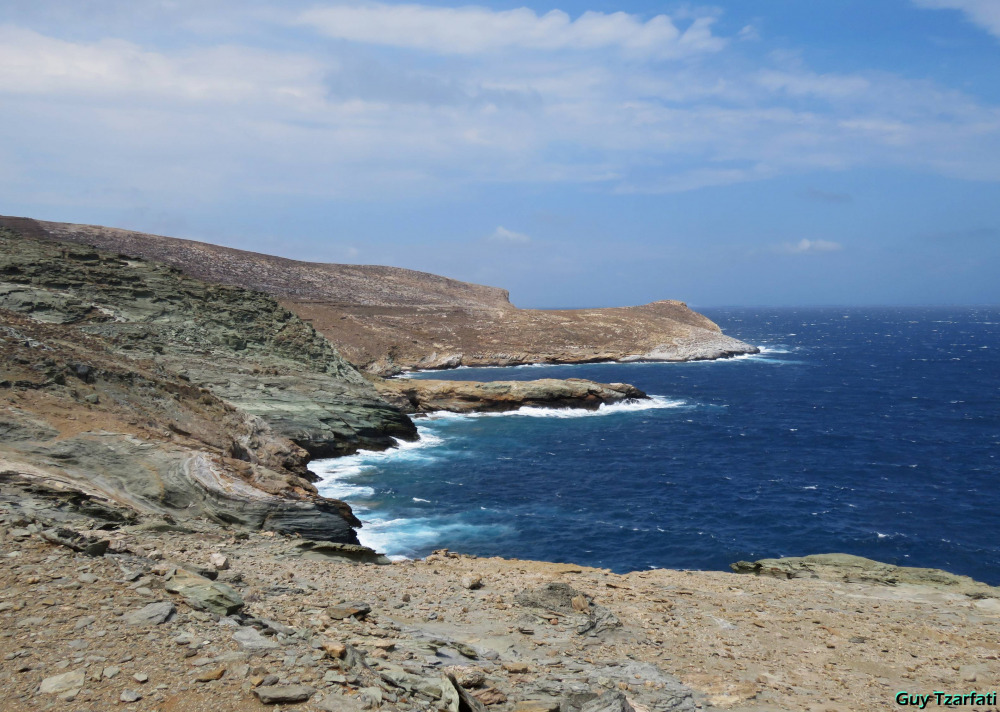
Greece greenschist


Our group focuses on the study of continental crust development with an emphasis on tectonics, petrology and geochronology of ancient and young urogens, and Provence studies on land and sea. The research is based on observations and sampling of selected sites in the field (in Israel and abroad) and laboratory research with an emphasis on micro-analysis of rocks and minerals using advanced analytical instrumentation. 


Our recent research focuses on the study of the Precambrian basemente in the Eilat area, the sources of the clastic sediments penetrated by deep sea drilling in the Levant basin, the development of the Alpine orogen of the Kyrenia Range in Northern Cyprus, the structure of the Alanya Complex in southern Turkey, and the geology of Europe as reflected in the geochronology of detrital minerals in the large rivers.


Research Methods


At the Institute of Earth Sciences, we established a laboratory for mineral separation (Yona Geller is a laboratory director) in which various minerals are extracted and separated (usually uranium-bearing and dateable, such as zircon and rutile). For separation we use the Institute's rock laboratory and then, in the mineral separation laboratory, we use a wilfly table, magnetic separator, heavy liquids, optical binoculars and a polarizing microscope. We use the electron microprobe laboratory at the Institute for petrologic research, and the cathodoluminescence laboratory at the Nanoscience Center of the Faculty of Natural Sciences. Analytical research is carried out using state of the art analytical instrumentation that enables high-resolution geochemical and isotopic analysis of individual mineral crystals. We perform the isotopic measurements at the Laser Ablation MC-ICP-MS laboratory at Goethe University Frankfurt (FIERCE - Frankfurt Isotope & Element Research Center at Goethe Universität Frankfurt, Germany).


Research Students

Adar Glazer (PhD student)


Chen Vardi (Master's student) 


Contact Us


Researcher: dov.avigad@mail.huji.ac.il

Lab Manager: yona.geller@mail.huji.ac.il


Read Less
.

Dynamical Mesoscale Modeling

Prof. Dorita Rostkier Edelstein
Read More


Mesoscale and Planetary Boundary-Layer Meteorology, Mesoscale Numerical Weather-Prediction (from hours to seasons), Mesoscale Numerical Climate-Prediction, Impact of Weather and Climate on Environmental Applications: Urban Planning, Air Pollution, Dust Storms, Renewable Energies, Water Resources and Agriculture.

Research Methods

Dynamical Mesoscale Modeling:

  • The Weather Research and Forecasting (WRF) limited-area model including the following extensions:

    1. WRF-Chem: On-line coupled meteorology, atmospheric chemistry and mineral dust

    2. WRF-Urban: Detailed urban canopy modules

    3. MAD-WRF: Multi-sensor Advection Diffusion algorithm for advanced satellite cloud-initialization

    4. WRF-SCM: Single Column Model

    5. WRF-3DVAR, WRF-4DVar and WRF-EnKF: data assimilation suites based on 3- and 4-Dimensional Variational and Ensemble Kalman Filter algorithms

  • The Model for Prediction Across Scales (MPAS) global model with high-resolution zoom-in capabilities

Statistical modeling: 

  • Statistical downscaling using analogues and weather-regimes based algorithms


Research Students
  • Dr. Anton Gelman: Post-doc position

Subject: Improvement of numerical weather prediction over the Eastern Mediterranean trough clouds-data assimilation and           machine learning techniques

Email: anton.gelman@mail.huji.ac.il

  • Dr. Ilya Livshits: Researcher 

Subject: Development of an advanced model for dust forecasts over the Eastern Mediterranean 

Email: ilivsh@gmail.com


  • Borys Beznoshchenko: Ph.D. candidate with Dr. Eran Tas (Faculty of Agriculture) and Prof. Erick Fredj (Love Institute)
 Subject: Study of photochemistry over Israel with advanced modeling tools

 Email: Borys.Beznoshchenko@mail.huji.ac.il

  • Yoav Rubin: Ph.D. candidate with Prof. Pinhas Alpert (TAU)

 Subject: Use of microwave cellular links to measure atmospheric moisture and to improve numerical weather prediction

Email: rubin.yoav@gmail.com


Contact

Lab Lead: Prof. Dorita Rostkier-Edelstein 

Email: dorita.rostkier-edelstein@mail.huji.ac.il


Read Less

Physical Oceanography in Multiple Scales (POMS) Lab

Dr. Aviv Solodoch
Read More

Greece greenschist

We research physical processes in the oceans and seas, including circulation, waves, transport, mixing, air-sea interaction, and ocean-climate interactions. The investigated processes span the spectrum of scales between meters or less (e.g. mixing, waves, boundary layers) to the global overturning circulation in the oceans. The interactions between ocean physics at different scales are some of our principal foci.


Research Methods:

We employ a variety of research methods, with similar emphasis on numerical/theoretical modeling, and on marine observations/experiments

Research Students:


Liron Michaeli (lab manager/technician)

Xingyu Li (PhD student studying the ocean surface layer)

Etai Warszawer (MSc student, studying bottom turbulence and sediment suspension)

Jonathan Miller (BSc student, studying use of UAVs in surface flow measurements)


Contact Information: 

Dr. Aviv Solodoch | Aviv.Solodoch@mail.huji.ac.il | +972-51-2339913

Mr. Liron Michaeli (lab manager/technician) | lironmi@mail.huji.ac.il | 052-4510555


Read Less
.

Carbonate rock characterization


Dr. Uri Rib

Read More


I'm interested in the interactions among Earth internal processes (tectonic and magmatic), surface processes (erosion and weathering), and their role in the rock cycle, global climate, and the emergence and evolution of life. Over geological time, variations in the style and rate of tectonic activity, climate and ecology alter the compositions of rocks, ocean and atmosphere, and may register as variations in the texture and composition of sedimentary rocks and minerals. In recent years, my research has been focused on the development of new approaches to translate measured geochemical signals in such materials (e.g., clumped-isotope signals measured in carbonate minerals) to quantitative constraints on thermal, compositional and deformational histories of surface, sedimentary basins and metamorphic environments. I have been applying these approaches to study open and closed system reactions during the exhumation of the metamorphic core complex in Naxos (Greece), reconstruct the oxygen isotope composition of the Phanerozoic Ocean, constrain the uplift and exhumation history of the Colorado Plateau, and study the relationship between uplift and exhumation of the Himalaya and the Indian Monsoon intensity, and its potential effect on global climate.

Ongoing and future projects:

The Precambrian growth and stabilization of the continental lithosphere and its hypothetical role in the Oxygenation of Earth's atmosphere, global climate, and evolution of life.

Reconstructing the oxygen isotope composition of the Precambrian Ocean as a proxy for the proportions of weathering and hydrothermal alteration reactions in deep-time. 

Developing new carbonate clumped-isotope based analytical and modeling tools aimed to refine thermal compositional and deformational histories of sedimentary basins and metamorphic environments.

Test alternative hypotheses for the ‘Dolomite-Problem’ and the study the relationship between dolomitization and the Ocean Mg/Ca ratio in the geological past.

Test various hypotheses linking tectonic uplift and exhumation of the Himalayas to the Indian Monsoon intensity and Cenozoic global cooling.

Research Students

Nathalie Neagu (PhD)

Shlomit Frumkin (MSc)

Daniel Freedberg (MSc)

Contact Information 

Uri Ryb | uri.ryb@mail.huji.ac.il | 972-2-6584668+


Read Less